
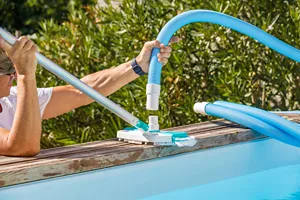
Proper pool vacuuming keeps water clean and protects the pool, keeping swimming areas inviting year-round. In Las Vegas and Henderson, desert dust and fine particles can quickly build up on pool floors and walls, so consistent cleaning matters. However, even homeowners who vacuum regularly may notice dirt returning shortly after cleaning.
Avoid common mistakes to improve your cleaning routine and reduce unnecessary strain on your equipment.
1. Vacuuming Too Quickly & Missing Debris
Moving the vacuum head too quickly can stir up fine particles before it collects them, letting debris spread into other areas or settle again after cleaning. Instead, move the vacuum slowly and use overlapping passes to cover the entire surface thoroughly.
Pay particular attention to corners, steps, and areas around drains where debris tends to collect. If visibility decreases as you vacuum, pause until suspended particles settle before continuing.
2. Skipping Brushing Before Vacuuming A Pool
Brushing the pool before vacuuming helps loosen dirt and other material that clings to walls and floor surfaces. Without this step, debris may remain attached even after the main floor appears clean. Use a brush appropriate for your pool’s surface to avoid scratching or damaging the finish.
Brush the walls and steps methodically, directing loose debris to areas where you can collect it. If algae keeps returning despite regular brushing and vacuuming, check the water chemistry and filtration system because cleaning alone may not resolve the underlying issue.
3. Ignoring The Pool Filter & Water Flow
A pool vacuum depends on adequate suction to collect dirt effectively. A clogged filter or air leak can reduce water flow and leave fine particles behind. Before vacuuming, inspect the system and follow the manufacturer’s instructions to clean the baskets and service the filter.
Different filtration systems require different maintenance procedures, so avoid relying on a single cleaning method for every pool. If suction remains weak after routine checks, a pool professional can assess the pump and filter for potential problems.
4. Using The Wrong Vacuuming Technique For Fine Dust
Desert dust can be difficult to remove because its particles are much smaller than leaves or larger debris. Depending on the equipment, vacuuming too aggressively may send fine material through the filtration system or stir it back into the water. Choose a vacuum suitable for your pool and follow the equipment manufacturer’s guidance for fine sediment.
Some pools may benefit from a manual vacuum setting that sends debris to waste, if the plumbing and equipment support that option. This method can remove certain suspended particles without passing them through the filter, but it also lowers the pool’s water level and requires careful monitoring.
5. Overlooking Pool Water Chemistry
Vacuuming removes physical debris, but it does not correct imbalanced water chemistry. Poor sanitizer levels or unsuitable pH can contribute to algae growth and cloudy water, making the pool look dirty again shortly after cleaning. Test the water regularly and adjust chemicals according to reliable product instructions or professional guidance.
How To Improve Your Pool Vacuuming Routine
A consistent cleaning sequence helps reduce missed spots and unnecessary repeat work. Use these practical steps to improve results during routine pool maintenance.
- Remove Large Debris: Skim leaves and floating material before vacuuming.
- Brush Pool Surfaces: Loosen dirt from walls, steps, and corners.
- Inspect Equipment: Check the hose, pump basket, filter, and suction before starting.
- Vacuum Slowly: Use overlapping passes and maintain steady movement.
- Check Water Chemistry: Test sanitizer and pH levels to help prevent algae from recurring.
Frequently Asked Questions About Pool Vacuuming
Why does dirt return after vacuuming my pool?
Fine particles may have been stirred up, passed through the filtration system, or introduced by wind and other environmental sources. Check suction, filtration, and pool cleaning technique before repeating the entire process.
How often should I vacuum my pool?
The ideal frequency depends on debris levels, pool usage, weather, and filtration performance. Pools exposed to frequent dust or wind may need more frequent cleaning.
Should I vacuum my pool before or after brushing?
Brushing first generally loosens attached debris so the vacuum can collect it. Allow suspended particles to settle when needed.
Keep Your Pool Cleaner With Professional Maintenance
Effective vacuuming involves more than removing visible dirt. Proper technique and balanced water chemistry help keep your pool cleaner and easier to manage. Oasis Pool Maintenance helps homeowners in Las Vegas and Henderson keep their pools clean with consistent care and attention to their cleaning needs.
Contact our team to discuss your pool maintenance needs and keep your pool ready for use.